
Roofing Terms Explained
Every estimate you collect will use these words. Here is what they actually mean, so you can compare quotes properly.
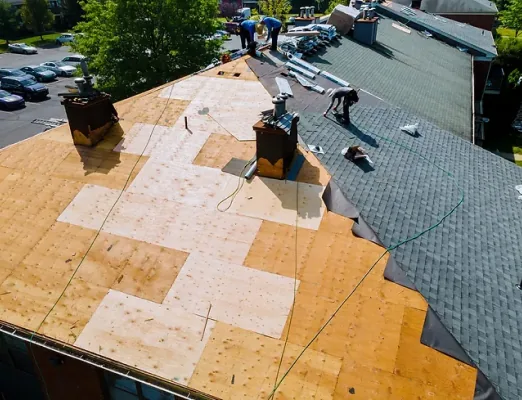
Roof deck / sheathing
The layer of wood the whole roof is built on, fixed to the joists and trusses — usually plywood or OSB, and plank sheathing such as shiplap on older homes. Everything else is attached to this, which is why it gets inspected once the old roof is off.
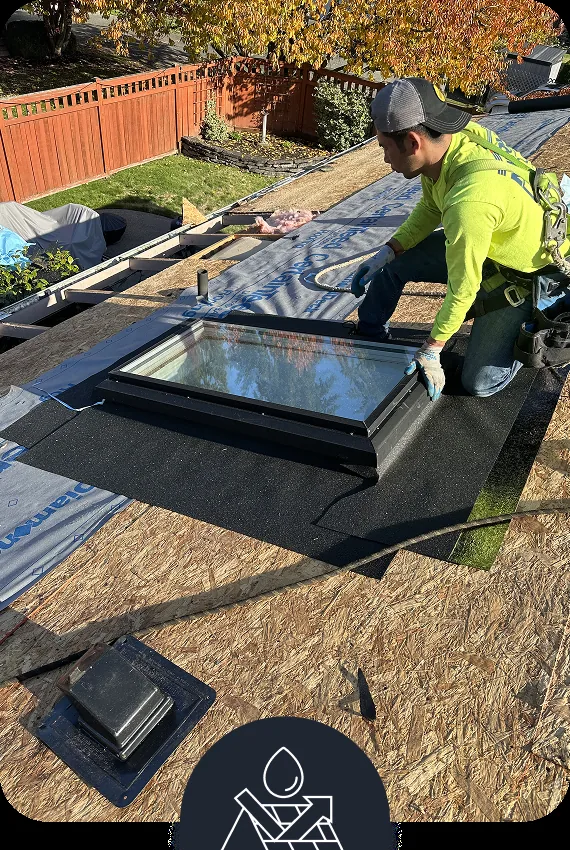
Underlayment
The water-resistant layer rolled over the deck before shingles go on. It is the roof’s second line of defense when wind drives water under a shingle.
Ice and water shield
A waterproof membrane used in addition to normal underlayment in the vulnerable areas — valleys, around penetrations, and the perimeter of the roof.
Flashing
Thin metal, usually galvanized steel, that directs water away from the places a roof is most likely to leak: skylights, chimneys, vents, and anywhere the roof meets a wall or dormer. Most leaks are a flashing problem.
Step flashing
Flashing installed in overlapping pieces that layer with each course of shingles where a roof meets a wall, so water sheds over each layer instead of finding a seam.
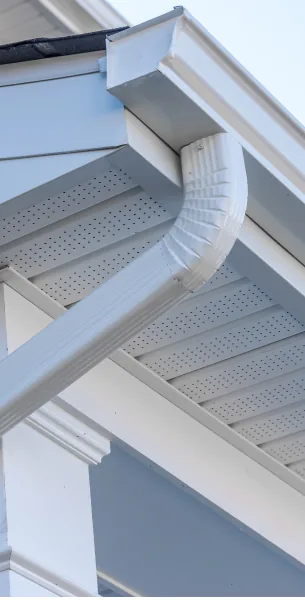
Drip edge / gutter apron
Metal at the roof edge that carries water off the roof and into the gutter, rather than back behind it into the fascia.
Valley
The internal angle where two roof slopes meet. Valleys carry more water than anywhere else on a roof, so they are a common failure point.
Ridge cap and ridge vent
The finished cap along the peak of the roof. A ridge vent is the exhaust half of the ventilation system, built into that peak.
Ventilation
Intake and exhaust that keeps air moving through the attic. Good ventilation extends the life of a roof and prevents moisture and mold building up underneath it.
Eaves
The lower edge of a roof, usually overhanging past the wall of the house.
Dormer
A structure projecting from a sloped roof, usually containing a window. Dormers add several roof-to-wall junctions, and every one of them needs flashing.
Tear-off
Removing the old roofing down to the bare deck before installing the new roof. The alternative — layering over the old roof — hides deck problems and shortens the life of the new one.
Roof tune-up
Targeted maintenance on an older roof: resealing nail heads and vents, securing loose flashing, fixing nail pops, replacing missing shingles. Buys years on a roof that is not yet ready to replace.
Granules
The mineral surface on asphalt shingles that protects them from sun. Finding excessive granules in your gutters is a sign the shingles are wearing out.
Soft washing
Cleaning a roof with low pressure and appropriate solutions rather than scrubbing or pressure washing, both of which strip granules off the shingles.
Low-slope roof
A roof too flat to shed water quickly enough for shingles. It needs a continuous membrane such as TPO instead.
These parts on a real roof
Still have a question about your roof?
Ask at the free inspection. There is no charge and no obligation.