
The Puget Sound Roof Maintenance Calendar
Wet winters, heavy tree cover and a long damp season are hard on roofs here in ways they are not elsewhere. This is what to do and when.


Season by season
Fall
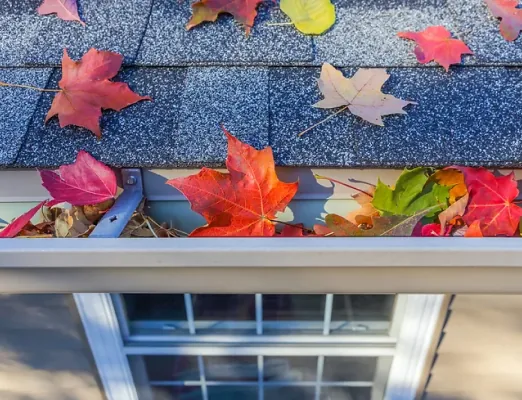
- Clear gutters and downspouts once the leaves are down, then again after the first big storm
- Clear needles and debris out of valleys, where they dam and push water sideways
- Check that downspouts still discharge away from the foundation
- Look for lifted or missing shingles after the first serious wind
Winter
- Watch for ceiling stains after a thaw, especially near the eaves
- Check the attic for daylight, damp insulation or frost on the sheathing
- At elevation, watch for ice building along the eave edge
- Do not go up on a wet or frosted roof — call instead
Spring
- Deal with moss before the dry season bakes it onto the shingles
- Look for granule build-up in the gutters, which is the roof aging
- Check flashing at chimneys, skylights and wall junctions
- Book any replacement now — the summer calendar fills early
Summer
- Trim branches back off the roof surface
- Check attic ventilation is clear and working before the heat
- Best window for tear-offs, repairs and gutter work
- Walk the perimeter and look up: this is when problems are easiest to see
Why moss is the local problem
Moss is not a cosmetic issue on a Puget Sound roof. It holds water directly against the shingle surface and works under the edges, lifting them. Once it has lifted a shingle edge, wind gets underneath and the seal breaks.
It grows fastest on north-facing slopes and anywhere under tree cover, which in this region is most roofs. A roof with nothing else wrong with it can lose years to moss nobody dealt with.
Pressure washing makes it worse. The pressure strips the mineral granules off asphalt shingles, and those granules are the layer protecting the shingle from sun. It buys a clean-looking roof today at the cost of roof life.
The five-minute check anyone can do
From the ground, twice a year. You are not diagnosing anything, you are deciding whether to call someone.
Walk the perimeter and look up
Missing tabs, dark patches where granules have gone, anything lifted or crooked along the ridge and the rake edges.
Look in the gutters
Grit that looks like coarse sand is shingle granules. A little is normal on a new roof. A lot on an old roof means it is wearing out.
Check the north slope
It is where moss starts. Green anywhere means it is established.
Look at the flashing
Around the chimney and where the roof meets a wall. Rust, gaps, or a thick smear of tar someone applied instead of fixing it properly.
Go into the attic with a flashlight
Daylight through the boards, damp or compressed insulation, dark staining on the underside of the sheathing. This is where a slow leak shows up long before it reaches a ceiling.
Maintenance questions
It depends almost entirely on shade and trees rather than on a calendar. A roof under heavy conifer cover can need attention every couple of years. An open, sunny roof can go far longer. If you can see green from the ground, it is time.
You can, and the two things worth knowing are that pressure washing strips the granules off asphalt shingles, and that wet moss on a pitched roof is genuinely dangerous. More people are hurt cleaning roofs than doing almost anything else on a house.
Zinc or copper strips at the ridge do help, in a limited way: rain carries a trace of metal down the slope and slows regrowth. They work best as prevention on a roof that has just been cleaned, not as a cure for growth that is already established.
Late spring through early fall gives the most reliable weather windows, and that is when everyone books, so lead times stretch. Winter work is entirely possible — tear-off and dry-in happen the same day — it just needs a genuine dry window, and we will be straight with you about whether the forecast supports it.
Not sure what you are looking at?
Send a photo or book a free inspection. If it is nothing, we will tell you it is nothing.