How to Tell If Your Gutters Are Undersized for Puget Sound Rain
Gutters that overshoot in heavy rain are not clogged — they are too small. Here is how to tell the difference, and why it matters more here than almost anywhere.
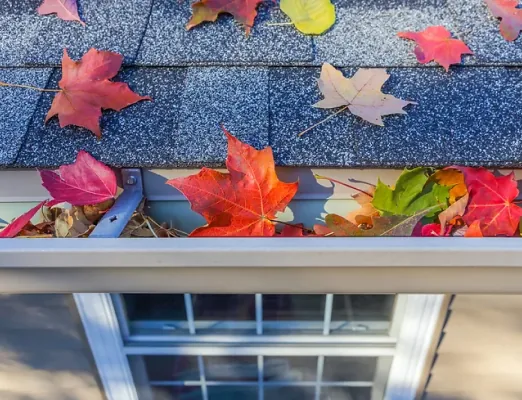
If water sheets over the front of your gutter in a heavy downpour, the usual assumption is that it needs cleaning.
Sometimes. But if it happens on a gutter you cleared last month, the gutter is probably too small for the roof feeding it — and no amount of cleaning fixes that.
Why size is a bigger deal here than elsewhere
It is not the intensity of our rain. Puget Sound downpours are not dramatic by national standards.
It is the duration, combined with needle load. A gutter here spends months at a time wet, moving water more or less continuously, while conifers drop fine debris into it year-round. Needles are worse than leaves: they knit together into a dense mat that water cannot pass, and they arrive constantly rather than in one autumn burst.
So a gutter here is doing more total work, in a dirtier state, than the same gutter in a drier climate.
The signs it is undersized
Water sheets over the front edge in heavy rain. The clearest signal. If it happens when you know the gutter is clear, capacity is the problem.
It overshoots at a specific spot every time. Usually the bottom of a long run, or below a valley. A valley concentrates the runoff from two roof planes into one point, and a standard gutter can be swamped right there while the rest of the run copes fine.
Water runs behind the gutter and down the fascia. Often a drip edge or gutter apron problem rather than size — the metal that should carry water off the roof edge into the gutter is missing or badly set.
Staining, rot or peeling paint on the fascia board. The gutter has been overflowing backward long enough to soak the wood behind it.
Erosion, splashback or standing water at the foundation. The water is arriving at the ground rather than being carried away.
Two numbers that decide it
Gutter size. 5-inch K-style is the residential default. 6-inch carries roughly 40% more water and is the sensible choice on a large roof, a steep roof, or one with long runs and valleys concentrating flow.
Downspout count and placement. This is the one people forget. A perfectly sized gutter with too few downspouts still backs up, because the gutter is only a channel — the downspout is the drain. Long runs need more of them, and they should be placed where the water actually collects.
Steep roofs matter too: water arrives at the gutter faster and with more momentum on a steep pitch, so it is more likely to overshoot even when volume is within capacity.
Where the water goes after the downspout
Half of what we see blamed on gutters is a discharge problem.
A downspout that dumps at the base of the wall has moved the water three feet and solved nothing. It should discharge well away from the foundation, into a drain line, or onto a hard surface that carries it off. On a lot that slopes toward the house, this matters a great deal.
Signs it is not working: a damp crawlspace, efflorescence on foundation concrete, a flowerbed that never dries, or moss growing up the base of the siding.
Do it with the roof, if the roof is due
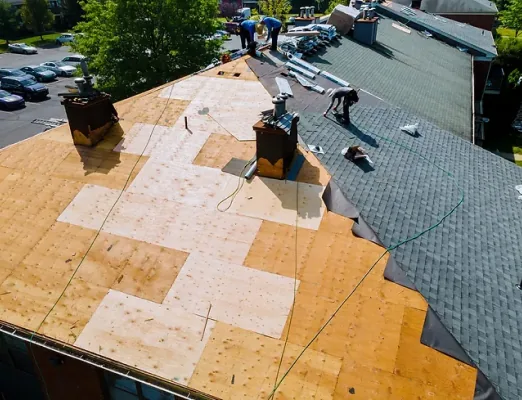
If you are replacing the roof, that is the moment to sort the gutters.
The drip edge and gutter apron — the metal that gets water off the roof edge and into the gutter rather than behind it — are installed as part of the roof. Doing both together means those two systems are detailed to work with each other, and you are not paying to set up, stage and access the same roofline twice.
It is also the only time anyone will be looking closely at the fascia, which is where a long-overflowing gutter does its real damage.
What it costs
Gutters and downspouts typically run $500 to $3,500 depending on how much gutter the house needs and how complicated the runs are.
The thing worth understanding is that gutters are cheap relative to what they protect. A failed gutter does not damage the gutter — it rots fascia, soaks siding and pushes water into a foundation, and all three of those cost considerably more to put right.
We install gutters across all 31 cities we serve. If you are not sure whether yours are undersized or just need clearing, that is exactly the kind of thing a free inspection settles in ten minutes.
Written by the Brixton & Windsor Roofing crew. We are a family owned, CertainTeed ShingleMaster™ PRO roofing company in Bothell, and Daniel does every estimate himself. If something here applies to your roof and you want a second opinion on it, the inspection is free.