Does Home Insurance Cover a Roof Leak in Washington?
Sometimes. Insurers separate sudden damage from wear and tear, and knowing which one you have before you file matters more than most people expect.
This is one of the most common questions we get, and the honest answer is: sometimes, and it depends on what caused it.
We are roofers, not adjusters, and we cannot tell you what your insurer will decide. What we can do is explain the distinction they are making, because understanding it before you file is worth real money.
The line insurers draw
Almost every homeowner’s policy separates two things:
Sudden, accidental damage — a windstorm lifts shingles off, a limb comes through the roof, hail bruises the surface. Something happened, on a date, and the roof was fine before it. Generally covered.
Wear and tear — the roof is 27 years old, the granules are gone, the shingles are curling, and it has started letting water through. Nothing happened; the roof simply reached the end. Generally not covered, on the basis that maintenance is the homeowner’s responsibility.
This is why two neighbors with identical leaks can get opposite answers. The question is not how bad the leak is, it is what caused it.
Where it gets complicated
Consequential damage is often treated differently from the roof itself. A policy may decline to pay for the roof (wear and tear) while still covering the ceiling, insulation and flooring the water ruined. Worth asking about explicitly rather than assuming a “no” covers everything.
Age matters. Many policies shift older roofs from replacement cost to actual cash value — meaning they pay the depreciated value rather than what a new roof costs. On a 20-year-old roof that difference can be most of the money. Check which basis your policy uses before you need it; it is usually in the declarations page.
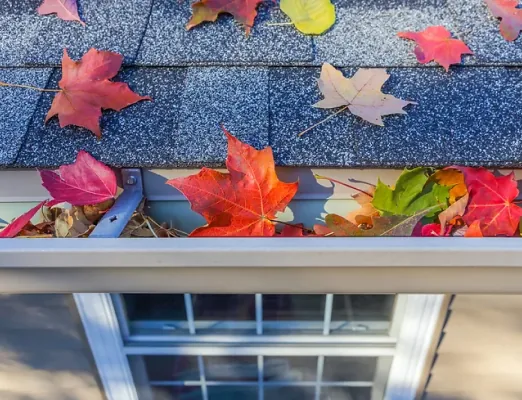
Maintenance neglect can void an otherwise valid claim. If an adjuster concludes that a failure came from moss left for years or gutters never cleared, a storm on the same date may not save it. This is one of several reasons regular maintenance is worth doing.
Should you even file?
Not always, and this is where a roofer being straight with you is worth something.
If the repair is $900 and your deductible is $1,000, filing achieves nothing except a claim on your record. Get the repair number first, then decide. Any roofer who pushes you to file before telling you what the fix costs is not working for you.
What we actually do
For storm damage we will:
- Inspect the whole system and photograph everything we find, dated
- Write a scope and estimate your adjuster can work from — itemized, in the format they expect
- Meet the adjuster on site where it helps, so the same damage is being looked at by both of us
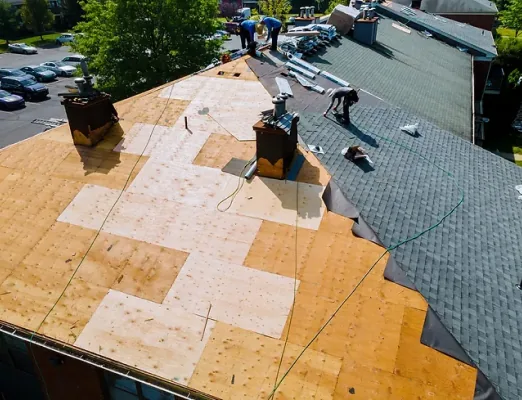
- Do the work once the claim is settled
What we will not do:
- Tell you a claim will definitely be approved. We do not decide that.
- Offer to “cover your deductible.” In Washington this is a serious problem, not a favor — it is insurance fraud, and it is the homeowner’s name on the claim.
- Knock on your door after a storm claiming your roof is destroyed. Storm-chasing crews follow weather events, work fast, and are gone before the warranty matters.
What to do the day it happens
- Stop the water if you safely can — buckets under active drips, move furniture, but do not get on a wet roof.
- Photograph everything before you move or clean anything. Inside and out, wide and close.
- Call your insurer to open the claim and get the number.
- Call a roofer for a temporary cover if the roof is genuinely open. Most policies require you to prevent further damage, and reasonable emergency work is usually reimbursable — keep the receipt.
- Do not sign anything that assigns your claim benefits to a contractor until you understand exactly what you are signing.
Wind damage is easy to miss
Wind rarely strips a whole roof. Far more often it lifts and creases shingles, breaks the seal strips holding each course down, and tears flashing loose.
From the ground the roof looks completely fine. The leak arrives a year later, by which point the storm date is long past and the claim is harder to make.
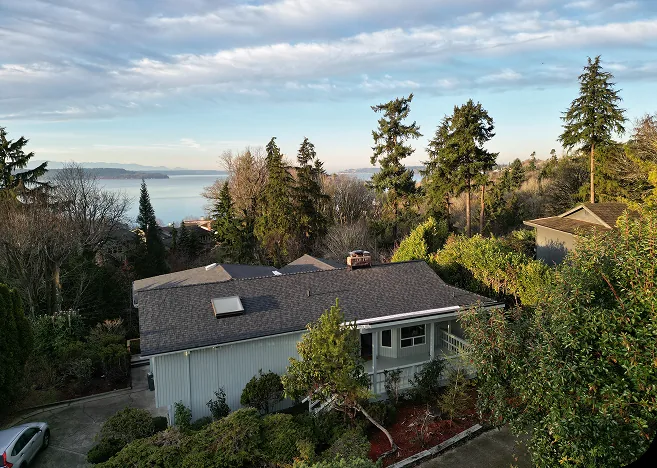
If a real blow has come through — and on the water in Mukilteo, Stanwood or Federal Way that is most winters — it is worth having someone look while the cause is still recent.
We inspect storm damage free, document it properly, and tell you honestly whether you have a claim or a repair.
Written by the Brixton & Windsor Roofing crew. We are a family owned, CertainTeed ShingleMaster™ PRO roofing company in Bothell, and Daniel does every estimate himself. If something here applies to your roof and you want a second opinion on it, the inspection is free.