How Long Does a Roof Actually Last in the Puget Sound?
The honest answer is 20 to 30 years for asphalt — but where your roof lands in that range depends on four things, and three of them are decided the day it goes on.
Ask five roofers how long a roof lasts and you will get five numbers. The honest answer for this region is 20 to 30 years for an asphalt roof, and a metal roof will usually go longer.
That is a wide range, and where your roof lands in it is not luck. Four things decide it, and three of them are settled the day the roof goes on.
1. What went on the roof
Not the brand — the grade.
Three-tab shingles are the flat, single-layer kind you see on a lot of houses built here in the 1980s and 1990s. They were what builders used because they were cheap. They sit at the short end of that range, and in a windy spot they can fall short of it.
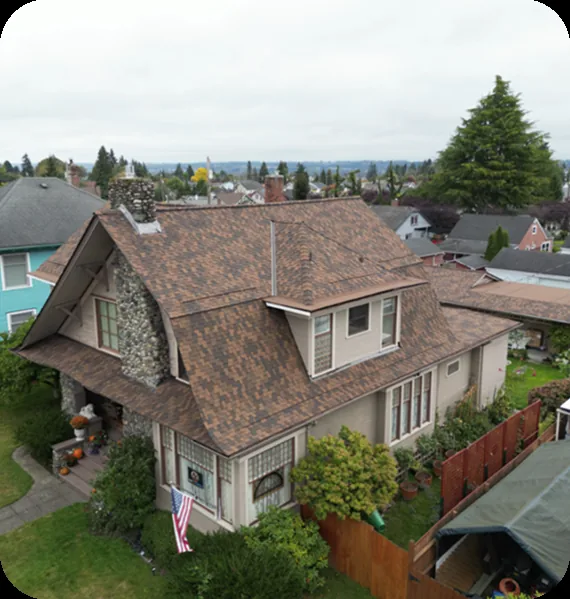
Architectural shingles are built up from multiple layers, so they are thicker and heavier. They handle wind better, they lie better on an imperfect deck, and they last meaningfully longer. The price difference across a whole roof is smaller than most people expect.
If you do not know which you have, look at the bottom edge from the ground. Three-tab reads as a flat, even grid. Architectural has depth and an irregular, shadowed pattern.
2. Whether it was installed properly
This is the one nobody can see, and it is the biggest single variable.
A shingle carries a wind rating, and that rating assumes it was nailed in the right place, with the right number of fasteners, driven to the right depth. Nails too high miss the layer they are supposed to catch. Nails driven too deep cut through the shingle. Neither is visible once the next course goes on, and both show up years later as a roof that loses tabs in weather it should have handled.
The same goes for what is underneath: whether there is a full layer of underlayment, whether ice and water shield went into the valleys and along the eaves, and whether the flashing is new or somebody reused the twenty-year-old metal that was already there.
Most roofs in this region do not fail in the middle of a slope. They fail at a detail — a chimney, a skylight, a valley, or where the roof meets a wall.
3. Ventilation
An attic needs intake low and exhaust high, so air moves through continuously.
When it does not, moisture from inside the house collects under the roof deck. Over years that degrades the sheathing from beneath, and it is why a roof can look fine from the street while the wood underneath has gone soft. Poor ventilation also cooks shingles from below in summer, aging them faster than sun alone would.
Ventilation is cheap to get right during a replacement and awkward to retrofit afterward. It is worth asking any roofer bidding on your house what they are proposing to change about it, and being suspicious if the answer is “nothing.”
4. What you do afterward — moss, mostly
This is the only one still in your hands, and around here it matters more than it does almost anywhere else in the country.
Moss holds water directly against the shingle surface and works under the edges, lifting them. Once an edge is lifted, wind gets underneath and breaks the seal. A roof with nothing else wrong with it can lose years to moss nobody dealt with.
It grows fastest on north-facing slopes and under tree cover, which in the Puget Sound describes most roofs. Soft washing removes it without stripping the mineral granules off the shingles the way pressure washing does — and those granules are the layer protecting the shingle from the sun.
So how do I know where mine is?
The roof will usually tell you before it leaks:
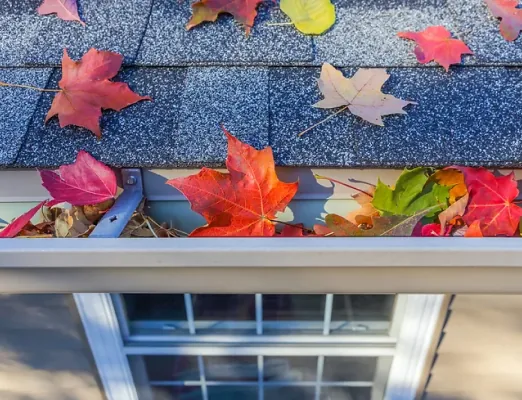
- Granules in the gutters. A little is normal on a new roof. A lot, on an old one, is the shingle wearing out.
- Curling or cupping edges. The shingle is losing its flexibility.
- Bare or shiny patches where the granule layer has gone.
- Moss you can see from the ground, especially on the north slope.
- Any leak at all, which is the roof telling you the time for a decision has passed.
Two or three of those together on a roof that is twenty-plus years old is a clear answer. One of them on a fifteen-year-old roof is usually a repair.
The part worth planning for
Replacing a roof before it leaks costs the same as replacing it after — except that after, you are also paying for whatever the water reached inside, and you are doing it on the roof’s schedule rather than your own.
If your roof is in that 20-to-30 year window, it is worth having someone look at it while you still have the option of choosing when. Ours is free, and if the answer is “you have got five years left,” that is what we will tell you.
See what a free inspection covers or read what a roof actually costs here.
Written by the Brixton & Windsor Roofing crew. We are a family owned, CertainTeed ShingleMaster™ PRO roofing company in Bothell, and Daniel does every estimate himself. If something here applies to your roof and you want a second opinion on it, the inspection is free.