What Actually Happens During a Roof Replacement, Day by Day
Most people have never had a roof replaced. Here is the whole thing: noise, mess, driveway, pets, and the one step where surprises actually happen.
A roof replacement is one of the larger things that will happen to your house, and most people only do it once or twice in their life. Not knowing what to expect is normal.
Here is the whole thing, honestly, including the parts nobody mentions in a sales appointment.
Before the day
Materials arrive first, usually a day or two ahead. A pallet of shingles is heavy, and it will be placed where the crew can reach it — often the driveway. If where it lands matters to you, say so before delivery rather than after.
The dumpster arrives, and it needs to sit close to the house. Plywood goes underneath it to protect the driveway surface. If your driveway is stamped concrete, pavers, or newly sealed, tell us at the estimate — there are ways to work around it.
We watch the weather. Tear-off and dry-in happen the same day, so a roof is never left open overnight. If the forecast will not support that, we move the date. That is a good sign in a roofer, not an inconvenient one.
Day one: tear-off
This is the loud day.
Before anything comes off, landscaping and anything near the house that debris could damage gets covered. Crews start at the point farthest from the dumpster and work back toward it.
What it is actually like:
- It is loud. Shovels, boots and material hitting a dumpster, most of the working day. If you work from home and take calls, plan around it.
- Your house will vibrate a little. Things on shelves can shift. Take pictures off the walls in rooms directly under the roof, and expect a fine dust in the attic.
- Pets should be somewhere else if they are anxious. Dogs in particular find the day hard.
- Park on the street. You do not want a car under the drip line of a roof being stripped.
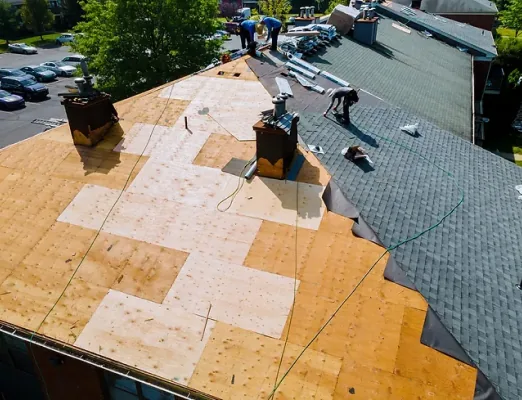
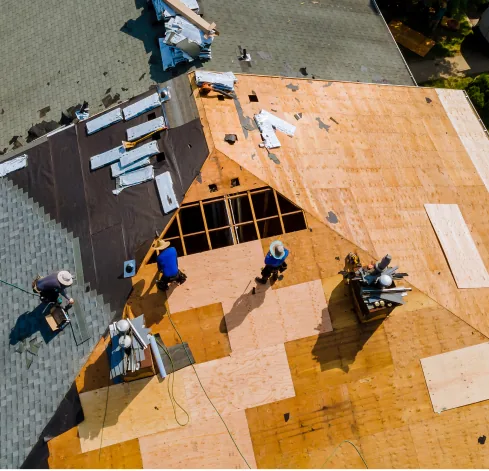
By the end of the day the old roof is off and the deck is exposed.
Step four is where surprises live
With the roof off, the whole deck gets inspected. There should be no moisture damage and no holes beyond old nail holes.
Nobody can see the sheathing until this moment. Not us, not the roofer who quoted lower. Occasionally there is rot or water damage underneath that no estimate could have accounted for.
What matters is what happens next. You should be told what was found, shown it, and given the cost before anything gets built over it. Ask any roofer bidding on your house for a per-sheet price for decking replacement, agreed before work starts. If it is not in the estimate, it becomes a change order later, at a number set when you have no leverage.
This is also the moment a job that looked permit-exempt in Snohomish or Pierce County stops being exempt — both tie the exemption to leaving sheathing in place. The rules by county are here.
Day one, continued: dry-in
The same day the roof comes off, it goes back to weathertight.
A full layer of underlayment covers the deck. Ice and water shield goes into the valleys, around penetrations and along the eaves — the places water is most likely to get pushed backward. All new 26-gauge galvanized metal flashing goes in where applicable.
If a crew tells you they will “tarp it overnight and finish tomorrow,” that is a different standard of work.
Days two to four: the new roof
Shingles go on from the bottom up, course by course, with the flashing details built in as the courses reach them. This is quieter than tear-off and takes most of the remaining time.
How long depends on size and complexity. Two to four days is typical. A large, cut-up roof with several dormers and multiple valleys takes longer than a simple gable of the same area, because every junction is built by hand.
The last day: cleanup and the walk
A thorough clean of the roof surface and the whole perimeter of the house, finished with a magnetic sweep for loose nails across the yard, driveway and beds. That last part comes up in our customer reviews more often than anything else, which tells you how often it gets skipped.
Then the crew inspects the finished roof against our own checklist, double-checking the areas known to leak most often.
And then Daniel comes back out. He meets you one more time, walks the work with you, and answers anything outstanding before any final payment is collected. That is step eight of our eight-step process and it has been there since the company started.
What you are left with
A roof, a written warranty, and — if it is a qualifying CertainTeed system — cover from the manufacturer alongside ours. What that actually means is here.
If you are weighing this up and want a real number for your house, the inspection is free and the estimate is itemized and yours to keep.
Written by the Brixton & Windsor Roofing crew. We are a family owned, CertainTeed ShingleMaster™ PRO roofing company in Bothell, and Daniel does every estimate himself. If something here applies to your roof and you want a second opinion on it, the inspection is free.